
The manufacturing of magnets is a fascinating process that transforms raw materials into components essential for nearly all modern technology—from simple refrigerator doors to complex medical imaging devices and electric vehicle motors. The specific method used depends heavily on the type of magnet being produced, primarily differentiating between Permanent Magnets and Electromagnets.
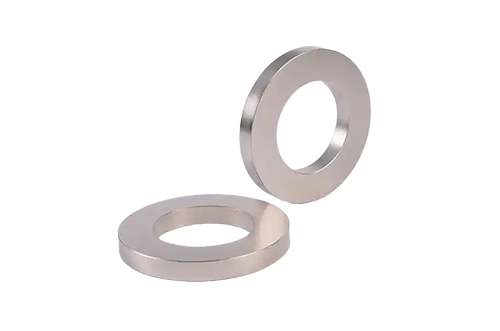
1. Manufacturing Permanent Magnets
Permanent magnets (like those made from Neodymium-Iron-Boron or Ferrite) retain their magnetic properties after being exposed to a magnetic field. Their production involves several key steps: Material Preparation, Forming, and Magnetization.
A. Material Preparation and Alloying
The first step is gathering and preparing the raw materials. For modern, high-strength magnets, this typically involves rare-earth metals (like Neodymium) and transition metals (like Iron and Boron).
Melting and Casting: The raw materials are melted together in a vacuum induction furnace to create a precise alloy. This liquid alloy is then cooled into large ingots or rapidly solidified into a fine powder, depending on the final production method.
Pulverization (For Sintering): For many high-performance magnets (like NdFeB), the alloy is crushed and ground into a very fine powder.
B. Forming the Magnet Shape
There are two primary methods for shaping the raw material into a usable magnet: Sintering and Bonding/Compression.
i. Sintering (High-Performance Magnets)
Sintering is the most common process for making powerful rare-earth magnets (like Neodymium).
Pressing: The fine magnetic powder is placed into a die and compacted under extremely high pressure. A key part of this step is die pressing in a magnetic field. This aligns the particles' magnetic axes in the desired direction, setting the "easy axis" of magnetization.
Sintering: The compressed block ("green body") is heated to a temperature well below its melting point. This causes the particles to fuse together, drastically increasing the density and mechanical strength without fully melting the material.
Machining and Grinding: The sintered block is often rough and needs to be precisely shaped. Diamond grinding tools are used to cut the magnet into its final dimensions and tolerances.
Coating: Neodymium magnets are highly susceptible to corrosion. They are typically given a protective coating, such as Nickel-Copper-Nickel (Ni-Cu-Ni) plating or a thin epoxy layer.
ii. Bonding (Lower-Performance, Complex Shapes)
Bonded magnets use magnetic powder mixed with a polymer binder (like plastic or rubber) to hold the particles together.
Injection Molding/Compression: This mixture is heated and then molded or extruded into complex shapes. These magnets are weaker than sintered magnets but can be made with high precision and do not require post-sintering machining.
C. Magnetization
Surprisingly, a permanent magnet is not magnetic when it leaves the production line after sintering or bonding. It is merely a piece of magnetized material.
Pulsed Magnetization: The finished part is placed inside a magnetizing coil (an electromagnet) and subjected to an extremely powerful, short-duration electrical pulse. This intense magnetic field forces all the magnetic domains within the material to align in the direction set during the pressing step, instantly making it a permanent magnet.
2. Manufacturing Electromagnets
Electromagnets are temporary magnets that only function when an electric current flows through them. Their manufacture is focused on constructing two primary components: the Coil and the Core.
A. Coil Production
The coil is the key to creating the magnetic field.
Winding: Insulated copper wire is wound tightly around a bobbin or directly onto the core material. The number of turns, the diameter of the wire, and the coil's shape are precisely calculated to achieve a specific magnetic field strength.
Insulation and Securing: The coil is often coated with varnish or encased in resin (potting) to protect the wire, ensure electrical insulation, and prevent vibration and unraveling.
B. Core Selection and Preparation
The core material concentrates the magnetic flux generated by the coil, significantly increasing the electromagnet's strength.
Soft Iron/Steel: Most general-purpose electromagnets use a core made of a ferromagnetic material like soft iron or specific types of steel, which magnetize easily but do not retain magnetism well (low coercivity).
Laminations: For Alternating Current (AC) electromagnets, the core is often made of thin, insulated sheets (laminations) of steel. This construction minimizes eddy currents, which cause energy loss and heat build-up.
Conclusion: Value and Applications
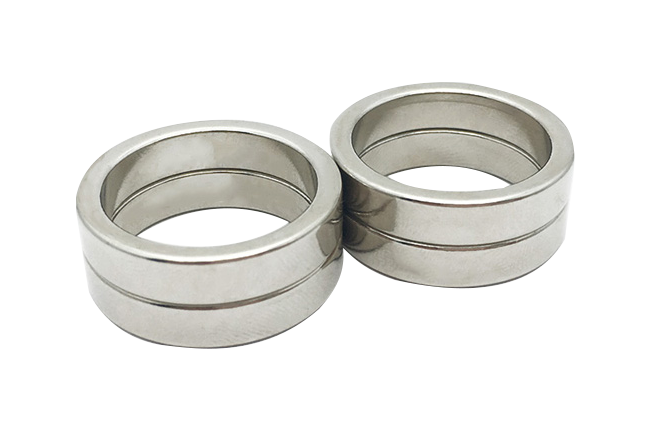
The precise manufacturing techniques for magnets have a high commercial and technological value. Advances in materials science, particularly with Neodymium Iron Boron (NdFeB) magnets, have been central to the rise of miniaturized electronics, high-efficiency motors, and renewable energy technologies. The efficiency and power density of modern devices are directly proportional to the quality and magnetic strength achieved through these complex, controlled manufacturing processes
Topping
Contact

We will contact you within 24 hours. ( WhatsApp/facebook:+86 15957855637)