
The mystery and utility of magnets have captivated humanity for centuries. From the compasses guiding ancient mariners to the tiny components that power our smartphones, these materials are indispensable. But while Earth has naturally occurring magnets (like lodestone), the vast majority of magnets we interact with every day are actually artificial!
The short answer is a resounding yes—magnets can be and are produced artificially through several fascinating processes.
The Science Behind Artificial Magnets
To understand how we create magnets, we first need a basic grasp of magnetism itself. Magnetism arises from the movement of electrons within an atom. In materials that can be easily magnetized, such as iron, nickel, and cobalt (known as ferromagnetic materials), the atomic structure allows tiny regions called magnetic domains to align.
In an unmagnetized material, these domains point randomly, canceling out their magnetic effects. To create an artificial magnet, we simply need to force these domains to align and point in the same direction.
Key Methods for Producing Artificial Magnets
There are two primary methods used to manufacture powerful, long-lasting magnets: Induction and Casting/Sintering.
1. Inducing Magnetism (The Temporary Approach)
This is the fastest way to turn a ferromagnetic material into a magnet.
Electromagnetism: This is the most common induction method. A piece of material (often an iron core) is placed inside a coil of wire (solenoid). When an electric current passes through the coil, it generates a strong magnetic field. This field forces the magnetic domains within the core to align. When the current is turned off, materials known as soft magnets (like pure iron) lose their magnetism quickly. However, materials known as hard magnets (like steel) retain the alignment, becoming a permanent magnet.
Friction: Although less efficient, rubbing a ferromagnetic object (like a steel needle) repeatedly in one direction with a strong permanent magnet can also induce magnetism by aligning the domains near the surface.
2. Manufacturing Permanent Magnets (The Industrial Approach)
For high-performance magnets, industrial processes are required to create alloys with superior magnetic properties. These processes typically involve specialized materials known as Rare Earth Magnets.
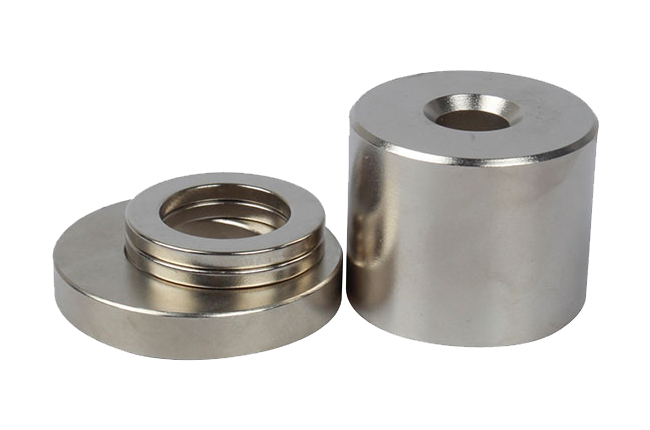
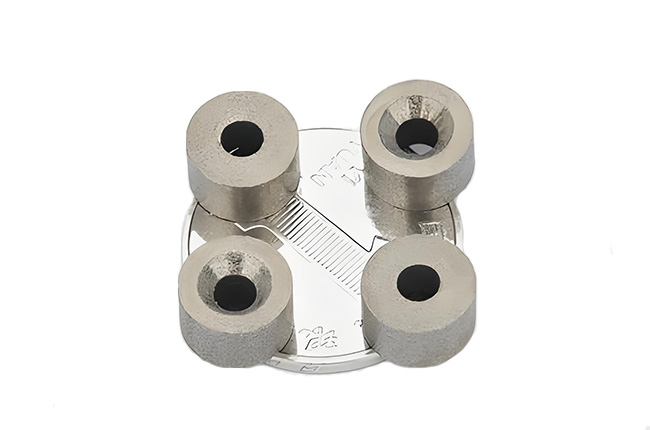
Casting/Sintering: The most powerful magnets are typically made from alloys like Neodymium-Iron-Boron (NdFeB) or Samarium-Cobalt (SmCo).
Casting: The raw materials are melted and poured into molds.
Sintering: The raw materials are ground into a fine powder, pressed into the desired shape, and then heated (sintered) to fuse the particles together.
Magnetization: After the alloy pieces are shaped, they must be exposed to an extremely powerful external magnetic field (created by a massive electromagnet) to achieve their full magnetic potential. This crucial final step permanently aligns their domains.
The Significance of Artificial Magnets
The ability to produce magnets artificially is critical for modern society. Natural magnets are often weak and irregularly shaped. Artificial methods allow manufacturers to:
Control Strength: Create magnets that are hundreds of times stronger than their natural counterparts (e.g., Neodymium magnets).
Control Shape and Size: Produce precisely shaped magnets for applications like hard drives, motors, and magnetic resonance imaging (MRI) machines.
Control Polarity: Define the exact location and strength of the North and South poles.
In conclusion, the powerful, highly specialized magnets that run the technology of the 21st century are all products of human ingenuity, transforming common elements into forces of nature through controlled scientific processes.
Topping
Contact

We will contact you within 24 hours. ( WhatsApp/facebook:+86 15957855637)