
Bonded and sintered neodymium (NdFeB) magnets are the two most common types of rare-earth magnets. While they share the same base chemistry—Neodymium, Iron, and Boron—their manufacturing processes, physical properties, and performance levels are fundamentally different.
Here is a technical comparison to help you understand which is best for your specific application.
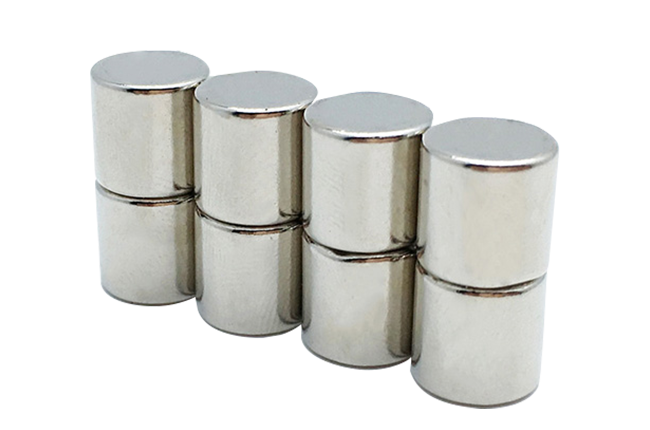
1. Manufacturing Process
The primary difference lies in how the magnetic particles are held together.
Sintered Neodymium Magnets: These are produced via a powder metallurgy process. Raw materials are melted, cast into a strip, and then milled into a microscopic powder. This powder is then compacted in a magnetic field to align the particles and "sintered" (heated in a vacuum furnace) until the particles fuse into a solid, dense block.
Bonded Neodymium Magnets: These are made by mixing "quick-quenched" NdFeB powder with a polymer binder (such as epoxy or nylon). The mixture is then formed into shapes through compression molding or injection molding. Unlike sintered magnets, they do not require high-heat fusion.
2. Magnetic PerformanceThe "strength" of a magnet is measured by its Maximum Energy Product (BHmax), typically in MegaGauss Oersteds (MGOe).
Sintered NdFeB
Magnetic Strength (BHmax):35 – 55+ MGOe
Structure:100% Magnetic material
Magnetic Density:High (~7.5 g/cm³)
Bonded NdFeB
Magnetic Strength (BHmax):6 – 12 MGOe
Structure:Mixed with non-magnetic binder
Magnetic Density:Lower (~6.0 g/cm³)
Sintered magnets are significantly more powerful because they are fully dense. Bonded magnets have lower performance because the non-magnetic binder "dilutes" the magnetic material.
3. Shape, Precision, and Machining
Bonded Magnets (The "Precision" Choice): Because they are molded, bonded magnets can be formed into highly complex shapes (thin-walled rings, gears, or intricate rotors) with extremely tight tolerances. They often require no secondary machining.
Sintered Magnets (The "Power" Choice): These are brittle and hard, like ceramics. They are typically produced as simple blocks or discs and must be sliced or ground using diamond-coated tools to reach final dimensions. They are prone to chipping and cracking.
4. Magnetization Patterns
Bonded Magnets: Most are isotropic, meaning they can be magnetized in any direction after they are molded. This allows for complex multi-pole magnetization (e.g., 12 or 24 poles on a single small ring), which is ideal for small motors and sensors.
Sintered Magnets: These are usually anisotropic, meaning they have a "preferred" direction of magnetization determined during the pressing stage. While they are much stronger, multi-pole magnetization on a single piece is technically difficult and expensive.
5. Corrosion Resistance and Coating
Bonded Magnets: The epoxy or plastic binder acts as an internal shield. While they still require a coating (like black epoxy) for harsh environments, they are naturally more resistant to corrosion than sintered types.
Sintered Magnets: Sintered NdFeB is highly susceptible to oxidation (rusting). They almost always require a protective surface treatment, such as Nickel-Copper-Nickel (NiCuNi), Zinc, or Gold plating.
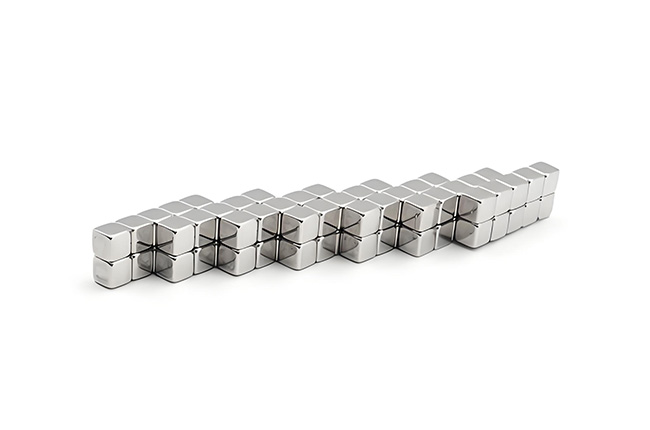
Summary Comparison Table
Sintered Neodymium
Relative Strength:Extremely High
Shape Complexity:Limited (Simple geometries)
Dimensional Accuracy:Requires Grinding
Brittleness,Very Brittle:Very Brittle
Typical Applications:EV Motors, Wind Turbines, MRI
Bonded Neodymium
Relative Strength:Moderate to Low
Shape Complexity:High (Complex molded shapes)
Dimensional Accuracy:High "out of the mold"
Brittleness,Very Brittle:Tougher/Resilient
Typical Applications:Hard Drives, Sensors, Micro Motor
Topping
Contact

We will contact you within 24 hours. ( WhatsApp/facebook:+86 15957855637)