
When discussing the performance and quality of Neodymium magnets, the "grade" is the most critical specification to understand. It serves as a definitive roadmap for the magnet's strength, temperature resistance, and intended application.
If you are sourcing or studying Neodymium-Iron-Boron (NdFeB) magnets, here is a professional breakdown of what these grades represent.
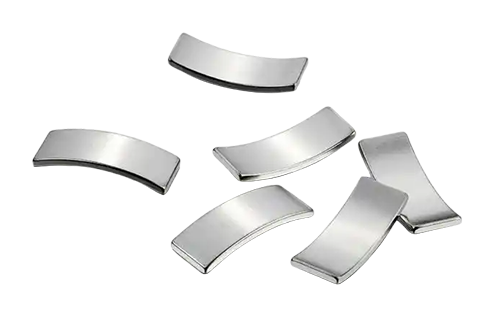
Understanding NdFeB Magnet Grades
The grade of a Neodymium magnet is an indicator of its Maximum Energy Product ((BH)max). This value represents the magnetic energy density of the material and is measured in MegaGauss Oersteds (MGOe).
Generally, the higher the number in the grade, the stronger the magnet. For example, an N52 magnet has a higher magnetic flux and pull force than an N35 magnet of the same physical dimensions.
The Anatomy of a Grade Name
A typical NdFeB grade consists of a prefix, a number, and an optional suffix.
The Prefix "N": This stands for Neodymium. All sintered NdFeB magnets begin with this letter to distinguish them from other materials like Samarium Cobalt (SmCo) or Ferrite.
The Number (35–55): This represents the (BH)max in MGOe. Currently, N52 is the most commonly available high-strength commercial grade, though N55 is utilized in specialized high-tech applications.
The Suffix (M, H, SH, UH, EH, AH): These letters indicate the Intrinsic Coercivity (Hcj), which effectively tells you the magnet's ability to resist demagnetization at elevated temperatures.
Temperature Stability and Suffixes
While the number tells you how strong the magnet is, the suffix tells you how hot it can get before it loses its magnetism. Standard "N" grades (with no suffix) are typically rated for operating temperatures up to 80°C (176°F).
If your application involves heat, such as in an electric vehicle motor or industrial machinery, you must choose a grade with an appropriate suffix:
M: Rated up to 100°C
H: Rated up to 120°C
SH: Rated up to 150°C
UH: Rated up to 180°C
EH: Rated up to 200°C
AH: Rated up to 230°C
How to Choose the Right Grade
Selecting a grade is a balancing act between magnetic requirements, environmental conditions, and cost.
High-Strength Applications (N50, N52): These are ideal for applications where space is limited but maximum pull force is required. They are frequently used in sensors, high-end headphones, and precision medical devices.
High-Temperature Applications (N35UH, N38EH): In automotive or aerospace engineering, the stability of the magnetic field under heat is more important than absolute peak strength. Using an N38EH magnet is often better than an N52 if the environment exceeds 150°C, as the N52 would undergo permanent demagnetization.
Cost-Effective Applications (N35): N35 is the "workhorse" grade. It offers the best price-to-performance ratio for general consumer goods, office supplies, and DIY projects where extreme power isn't a necessity.
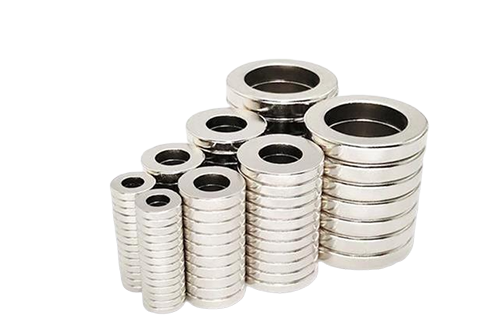
Technical Factors Influencing Grade Performance
It is important to note that the "grade" is an intrinsic property of the material, but the actual performance is influenced by the Permeance Coefficient (Pc). This is determined by the shape of the magnet and the magnetic circuit it is placed in. A very thin magnet will demagnetize more easily than a thick one, even if they share the same grade.
Furthermore, because NdFeB is prone to oxidation, these grades are almost always coated in Nickel (Ni-Cu-Ni), Zinc, or Epoxy to maintain their integrity over time.
Topping
Contact

We will contact you within 24 hours. ( WhatsApp/facebook:+86 15957855637)