
Permanent magnets are everywhere in modern life, from electric motors and loudspeakers to wind turbines and medical devices. Because they play such a critical role in technology, a common question often comes up: can a permanent magnet get stronger over time? The short answer is usually no—but the full explanation is more interesting and worth exploring.
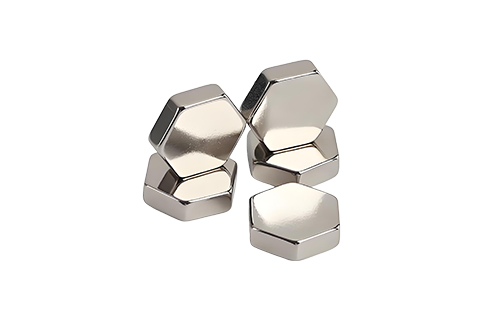
What Determines the Strength of a Permanent Magnet?
A permanent magnet gets its magnetic properties from the alignment of magnetic domains inside the material. These domains are tiny regions where atomic magnetic moments point in the same direction. When most of these domains are aligned, the magnet exhibits a strong magnetic field.
Several key factors influence how strong a Permanent Magnet is:
Material type: Neodymium (NdFeB), samarium cobalt (SmCo), ferrite, and alnico all have different intrinsic magnetic properties.
Manufacturing process: Sintering, bonding, heat treatment, and magnetizing fields during production directly affect performance.
Magnetization level: A magnet can only be as strong as its maximum magnetization allows.
Geometry and size: Shape and volume influence how magnetic flux is distributed.
Once these factors are fixed during manufacturing, the magnet’s maximum strength is essentially set.
Can a Permanent Magnet Become Stronger Naturally?
Under normal conditions, a permanent magnet does not become stronger on its own. The magnetic domains are already aligned to their practical limit when the magnet is fully magnetized at the factory.
In everyday environments, magnets are more likely to slowly lose strength rather than gain it. Causes of magnetic degradation include:
Exposure to high temperatures
Strong opposing magnetic fields
Mechanical shock or vibration
Long-term aging (very gradual for modern magnets)
So if you leave a Permanent Magnet sitting on your desk for years, it won’t suddenly wake up one day stronger than before.
Can a Permanent Magnet Be Re-Magnetized to Become Stronger?
Here’s where things get a little more nuanced.
If a permanent magnet was not fully magnetized during its initial production—or if it has partially lost magnetism—it can sometimes be re-magnetized. This process involves exposing the magnet to a very strong external magnetic field that realigns its domains.
However, this does not make the magnet stronger than its original design limit. It simply restores it closer to its maximum potential. In other words:
Re-magnetization can recover lost strength
It cannot exceed the magnet’s material limits
So while a Permanent Magnet may appear to get stronger after re-magnetization, it is really just returning to its intended performance level.
Can Processing or Environment Improve Magnetic Strength?
Some processes can indirectly improve how a magnet performs in an application, even if the intrinsic magnetic strength remains unchanged.
For example:
Optimized magnet orientation in an assembly can improve effective magnetic force
Magnetic circuit design, such as using steel back plates, can enhance flux output
Temperature control helps maintain stable magnetic properties
These improvements often give the impression that the Permanent Magnet itself has become stronger, when in reality the system around it is working more efficiently.
What About Newer Permanent Magnet Materials?
While individual magnets do not get stronger over time, new generations of permanent magnets certainly do.
Advances in materials science have led to:
Higher energy product NdFeB magnets
Improved grain boundary diffusion technology
Better temperature-resistant formulations
Compared to magnets made decades ago, modern Permanent Magnet materials can deliver much higher performance in the same size. This progress sometimes fuels the misconception that magnets “get stronger,” when in fact newer magnets are simply better engineered.
Common Myths About Strengthening Permanent Magnets
There are many myths online suggesting simple ways to strengthen a Permanent Magnet, such as:
Freezing the magnet
Hitting it with another magnet
Passing electric current nearby
These methods do not reliably increase magnetic strength and can even damage the magnet. In some cases, mechanical impact may reduce magnetization instead of improving it.
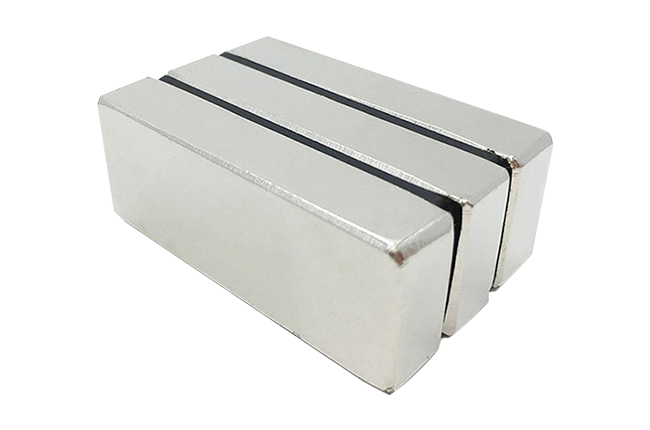
Final Thoughts: Can Permanent Magnets Get Stronger?
To sum it up, a Permanent Magnet does not naturally grow stronger over time. Its magnetic strength is determined by material properties and manufacturing processes, and once fully magnetized, it reaches a fixed upper limit.
That said, magnets can be re-magnetized, better utilized, or replaced with advanced materials to achieve higher performance in real-world applications. So while the magnet itself may not change, how we design and apply it certainly can.
Understanding these principles helps engineers and users make smarter decisions when selecting and using permanent magnets in modern technology.
Topping
Contact

We will contact you within 24 hours. ( WhatsApp/facebook:+86 15957855637)