
Rare earth magnets are the heavy hitters of the magnetic world, providing the incredible strength needed for electric vehicle motors, wind turbines, and high-end electronics. Despite their name, the "raw materials" that go into these magnets aren't necessarily rare in the Earth's crust, but they are difficult to extract and process into the high-purity forms required for manufacturing.
To understand what makes a rare earth magnet, we have to look at the specific chemical "recipes" for the two main types: Neodymium and Samarium Cobalt.
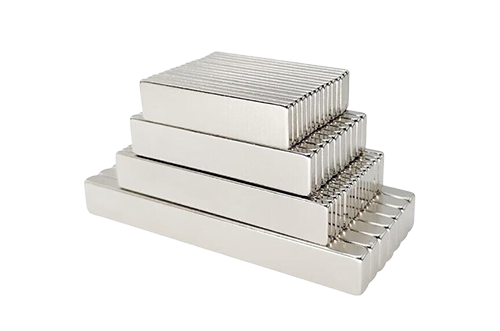
1. The Neodymium Magnet Recipe (NdFeB)
The most powerful permanent magnets used today are Neodymium-Iron-Boron magnets. Their raw material composition is a precise blend of three primary elements, often supplemented with "heavy" rare earths to improve performance.
Neodymium (Nd): The star of the show. It provides the core magnetic power. In many commercial magnets, neodymium is used in a "natural ratio" with Praseodymium (Pr)—another rare earth—because they are found together in nature and are difficult to separate. This mixture is often called Didymium.
Iron (Fe): This serves as the structural backbone of the magnet. Iron is a ferromagnetic material that helps the magnet maintain its shape and provides a high flux density. It typically makes up about 60–70% of the magnet's weight.
Boron (B): While used in small amounts (around 1%), boron is essential. It acts as a "glue" at the atomic level, locking the neodymium and iron atoms into a specific crystalline structure (Nd2Fe14B) that prevents the magnetic fields from being easily knocked out of alignment.
2. The Samarium Cobalt Recipe (SmCo)
Before neodymium magnets were invented, Samarium Cobalt was the king of rare earth magnets. Today, they are still used in aerospace and military applications because they can handle extreme heat.
Samarium (Sm): This rare earth element provides the magnet with its high resistance to demagnetization (coercivity).
Cobalt (Co): Cobalt is the transition metal used instead of iron. It is much more expensive than iron but provides incredible thermal stability, allowing the magnet to function at temperatures up to 350°C (662°F).
Trace Additives: Depending on the grade, manufacturers may add small amounts of Iron, Copper (Cu), Zirconium (Zr), or Hafnium (Hf) to fine-tune the magnet's physical and magnetic properties.
3. High-Performance Additives: The "Seasoning"
Standard neodymium magnets have a major weakness: they lose strength when they get hot. To fix this, manufacturers add "Heavy Rare Earth Elements" (HREE) to the raw material mix.
Dysprosium (Dy) and Terbium (Tb): These are the most critical additives. Adding even a small percentage of dysprosium or terbium drastically increases a magnet's "intrinsic coercivity," meaning it can stay magnetized even in high-heat environments like an electric car motor. These are significantly rarer and more expensive than neodymium.
4. Where Do These Raw Materials Come From?
The journey from the ground to a finished magnet involves several complex mining and chemical stages.
The Ore Minerals
Rare earth elements don't exist as pure chunks of metal in the ground. They are locked inside complex minerals, most commonly:
Bastnäsite: The primary source for "light" rare earths like neodymium and praseodymium.
Monazite: A phosphate mineral that contains a wide variety of rare earth elements.
Ion-Adsorption Clays: Found primarily in southern China, these are the main source for "heavy" rare earths like dysprosium.
The Extraction Process
Turning these ores into raw materials for magnets requires:
Beneficiation: Crushing the rock and using flotation to separate the target minerals.
Hydrometallurgy: Dissolving the minerals in acid to create a "mixed rare earth" liquid.
Solvent Extraction: A massive, multi-stage chemical process that separates the 17 different rare earth elements from one another to achieve 99.9% purity.
Reduction: Converting the purified oxides into metallic form using electrolysis or chemical reactions.
Why Raw Material Purity Matters
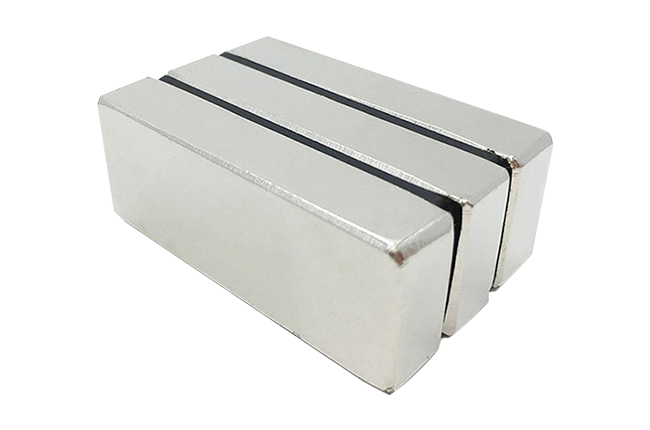
The quality of the raw materials is the single biggest factor in a magnet's performance. Even tiny amounts of impurities, such as oxygen or carbon, can disrupt the crystal lattice of the magnet, leading to "weak spots" that cause the magnet to lose its strength prematurely. This is why the processing stage is just as important as the mining itself.
Topping
Contact

We will contact you within 24 hours. ( WhatsApp/facebook:+86 15957855637)