
Rare earth magnets, primarily Neodymium (NdFeB) and Samarium Cobalt (SmCo), are the strongest permanent magnets in existence. While they are prized for their immense pulling force, they have a significant weakness: sensitivity to temperature.
If you are using these magnets in motors, industrial machinery, or even high-heat DIY projects, understanding their thermal limits is critical. Exceeding these limits can lead to a permanent loss of magnetic strength.
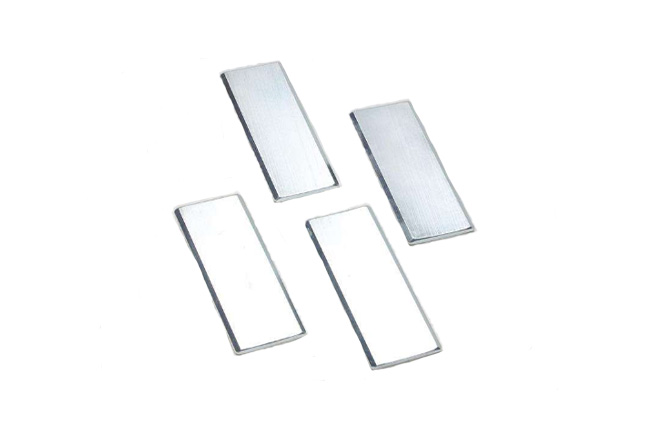
The Heat Limit of Neodymium Magnets (NdFeB)
Neodymium magnets are the most common type of rare earth magnet, but they are also the most sensitive to heat. For a standard neodymium magnet (usually labeled with a grade like N42 or N52), the maximum operating temperature is surprisingly low.
Standard Grades: Most standard neodymium magnets begin to lose their strength permanently once they reach 80°C (176°F).
High-Temperature Grades: Manufacturers add elements like Dysprosium to increase heat resistance. These are identified by a letter suffix:
M Grade: Up to 100°C (212°F)
H Grade: Up to 120°C (248°F)
SH Grade: Up to 150°C (302°F)
UH Grade: Up to 180°C (356°F)
EH Grade: Up to 200°C (392°F)
AH Grade: Up to 230°C (446°F)
It is important to note that as a magnet approaches these limits, its performance will weaken even before the limit is reached.
The High-Heat Champion: Samarium Cobalt (SmCo)
When an application involves extreme heat that would destroy a neodymium magnet, engineers turn to Samarium Cobalt. While slightly less powerful at room temperature, SmCo magnets are far more stable when things get hot.
Standard Operating Range: Most SmCo magnets can comfortably handle temperatures between 250°C and 350°C (482°F to 662°F).
Temperature Stability: Unlike neodymium, which loses strength rapidly as it warms up, SmCo maintains a very consistent magnetic field across a wide temperature range. This makes it the preferred choice for aerospace, military, and high-performance automotive sensors.
Reversible vs. Irreversible Magnetic Loss
When a rare earth magnet is heated, the loss of magnetism happens in three distinct stages:
Reversible Loss: If the magnet is heated but stays below its "Maximum Operating Temperature," it will become weaker while hot but will return to 100% strength once it cools back down.
Irreversible Loss: If the magnet exceeds its operating limit but stays below its "Curie Temperature," it will remain weakened even after it cools down. To fix this, you would need to re-magnetize it using a powerful external magnetic field.
Permanent Loss: If the magnet is heated beyond its Curie Temperature, the internal structure is scrambled so thoroughly that it can no longer hold a magnetic charge. For Neodymium, this point is roughly 310°C (590°F); for Samarium Cobalt, it is approximately 700°C to 800°C (1292°F to 1472°F).
Why Magnet Shape Matters
The "Maximum Operating Temperature" isn't just a fixed number—it also depends on the shape of the magnet.
A magnet's "Permeance Coefficient" (essentially its ability to resist demagnetization based on its dimensions) plays a huge role. In general, thin, flat magnets are much more vulnerable to heat than thick, blocky magnets of the same material. A very thin neodymium disc might suffer irreversible loss at only 60°C, even if it is technically rated for 80°C.
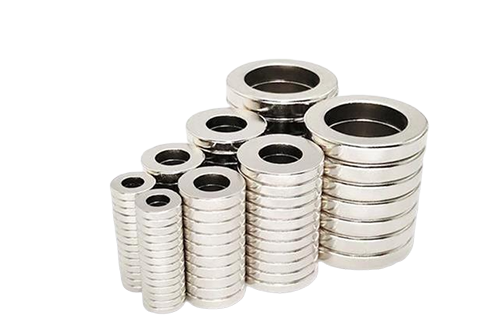
Summary of Thermal Capabilities
If you are choosing a magnet for a project, keep these general rules in mind:
Use standard Neodymium if your environment stays below 80°C.
Look for specialized Neodymium grades (SH, UH, EH) for environments up to 200°C.
Switch to Samarium Cobalt if you expect temperatures to exceed 200°C or if you need extreme stability.
Avoid using rare earth magnets entirely in environments like ovens or kilns where temperatures exceed 350°C, as they will likely fail.
Topping
Contact

We will contact you within 24 hours. ( WhatsApp/facebook:+86 15957855637)