
Neodymium Iron Boron (NdFeB) magnets are widely recognized as some of the most powerful permanent magnets available in the market today. These magnets are a type of rare-earth magnet, and their strength is a key reason why they are used in a variety of applications, from small electronics to large industrial equipment. In this article, we will explore how strong NdFeB magnets are when compared to other types of magnets, such as ceramic (ferrite), alnico, and samarium-cobalt magnets.

What Are NdFeB Magnets?
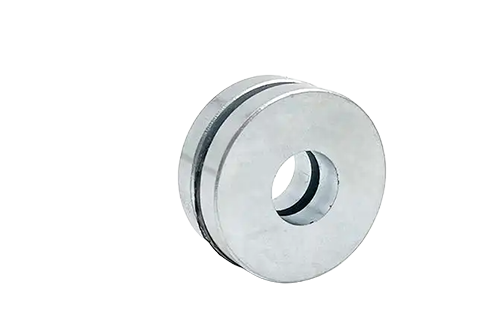
NdFeB magnets, often referred to as neodymium magnets, are made from an alloy of neodymium (Nd), iron (Fe), and boron (B). They are known for their exceptional magnetic properties, including high magnetic energy product and coercivity. This allows them to produce a strong and stable magnetic field relative to their size. The combination of these elements gives NdFeB magnets their superior strength and makes them ideal for applications that require compact yet powerful magnets.
Magnetic Strength of NdFeB Magnets
The strength of a magnet is typically quantified by its maximum energy product (measured in Mega Gauss Oersteds, or MGOe) and its coercivity (the ability to resist demagnetization). NdFeB magnets usually have a maximum energy product ranging from 33 MGOe to 52 MGOe, depending on the grade of the magnet. This makes them the strongest commercially available permanent magnets, with a strength several times greater than other types of magnets.
Comparison with Other Magnets
1. Ceramic (Ferrite) Magnets
Ceramic magnets, also known as ferrite magnets, are made from a combination of iron oxide and barium or strontium carbonate. These magnets are widely used due to their low cost and resistance to corrosion, but they are much weaker than NdFeB magnets. The maximum energy product of ceramic magnets typically ranges from 1.5 MGOe to 5 MGOe, which is significantly lower than that of NdFeB magnets.
While ferrite magnets are good for applications where strength is not a primary concern (such as refrigerator magnets or loudspeakers), they are not suitable for high-performance tasks that require strong magnetic fields in compact spaces.
2. Alnico Magnets
Alnico magnets are composed of aluminum, nickel, cobalt, and iron. These magnets are known for their high temperature stability and resistance to corrosion. However, in terms of magnetic strength, alnico magnets are much weaker than NdFeB magnets. Their maximum energy product typically ranges from 5 MGOe to 12 MGOe.
While alnico magnets offer certain advantages, such as high performance at elevated temperatures, they do not match the strength of NdFeB magnets and are often used in applications like sensors, motors, and microphones where strength is less critical.
3. Samarium-Cobalt Magnets
Samarium-cobalt (SmCo) magnets are another type of rare-earth magnet, made from alloys of samarium and cobalt. While they do not reach the strength of NdFeB magnets, they are still much stronger than ceramic and alnico magnets. SmCo magnets have a maximum energy product ranging from 16 MGOe to 32 MGOe, making them a good choice for high-performance applications, especially in environments with high temperatures.
Samarium-cobalt magnets offer good magnetic stability and resistance to corrosion but are more expensive than ferrite and alnico magnets. However, their performance is often not as high as NdFeB magnets, especially when size and weight are critical factors.
Advantages of NdFeB Magnets
The superior strength of NdFeB magnets comes with a range of benefits that make them ideal for modern technology applications. Here are a few advantages:
Compact Size and High Strength: NdFeB magnets are powerful enough to perform effectively in smaller sizes, making them ideal for devices like hard drives, motors, and magnetic assemblies.
Energy Efficiency: Due to their high magnetic energy product, NdFeB magnets can create strong magnetic fields without needing large amounts of energy, making them highly energy-efficient in many applications.
Versatility: NdFeB magnets are used in a wide range of industries, including electronics, automotive, renewable energy (such as wind turbines), medical devices (MRI machines), and consumer goods (headphones, electric motors).
Applications of NdFeB Magnets
Some of the most common applications of NdFeB magnets include:
Electric Motors: Due to their high strength-to-weight ratio, NdFeB magnets are used in electric motors, particularly in hybrid and electric vehicles (EVs), where size and weight are crucial.
Speakers and Headphones: The strong magnetic field produced by NdFeB magnets enhances sound quality and is used in high-end audio systems and headphones.
Wind Turbines: NdFeB magnets are increasingly used in the generators of wind turbines due to their high power density and efficiency.
Medical Devices: MRI machines and other medical equipment benefit from the strength and compact size of NdFeB magnets.
Conclusion
In conclusion, NdFeB magnets are by far the strongest permanent magnets currently available, far surpassing the strength of ceramic, alnico, and samarium-cobalt magnets. With their high magnetic energy product and coercivity, they provide unparalleled performance in compact sizes, making them indispensable for modern technologies. Whether in motors, medical devices, or renewable energy systems, NdFeB magnets continue to play a critical role in driving innovation across various industries.
Topping
Contact

We will contact you within 24 hours. ( WhatsApp/facebook:+86 15957855637)