
As electric motors become more powerful and compact, the materials used inside them are under increasing scrutiny. Among these materials, neodymium magnets—especially high-grade types—are critical to modern motor design. One question frequently raised by engineers and industry observers is whether N52 magnets, the strongest commercially available neodymium magnets, can be used in motors.
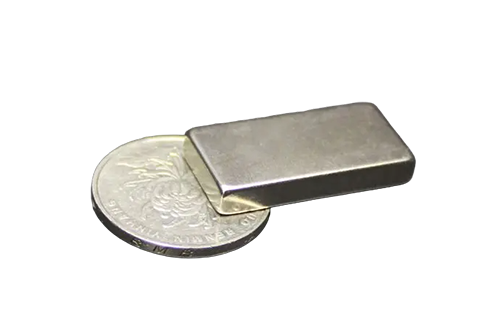
What Makes N52 Magnets Special
N52 magnets represent the highest standard grade of neodymium iron boron magnets currently produced at scale. Their defining feature is their exceptionally high magnetic strength, which allows motors to generate more torque in a smaller volume. This makes N52 magnets attractive for applications where efficiency, weight reduction, and power density are top priorities.
In theory, stronger magnets can improve motor efficiency by reducing electrical losses and enabling more compact designs. For industries such as electric vehicles, aerospace, and robotics, these benefits are highly appealing.
Practical Use of N52 Magnets in Motors
Yes, N52 magnets can be used in motors, and in some cases they already are. They are most commonly found in small, high-performance motors where space is limited and operating temperatures are tightly controlled. Examples include precision servomotors, high-end consumer electronics, drones, and specialized industrial equipment.
In these environments, the high magnetic flux of N52 magnets allows designers to achieve strong performance without increasing motor size. This can lead to quieter operation, faster response times, and improved energy efficiency.
Temperature Sensitivity and Design Constraints
Despite their strength, N52 magnets have limitations that affect their suitability for many motor applications. One of the most significant challenges is temperature resistance. Standard N52 magnets typically have a lower maximum operating temperature than lower-grade neodymium magnets designed for high-heat environments.
Electric motors, especially those used in vehicles and heavy industrial machinery, can generate substantial heat during operation. If a magnet is exposed to temperatures beyond its rated limit, it may suffer irreversible demagnetization, leading to reduced motor performance or failure.
For this reason, many motor manufacturers prefer lower-strength neodymium magnets with higher temperature ratings, even if they offer less magnetic force on paper.
Why N52 Is Not Always the Best Choice
In real-world motor design, the strongest magnet is not always the most reliable option. Engineers must balance magnetic strength, thermal stability, mechanical stress, cost, and long-term durability. High-grade magnets like N52 are also more expensive and can be more brittle, requiring careful handling and precise assembly.
In large traction motors, such as those used in electric cars, manufacturers often select magnets that deliver consistent performance across a wide temperature range rather than maximum magnetic strength alone. This is why grades optimized for high-temperature operation are more commonly used in automotive motors.
Industry Trends and Future Outlook
Research and development efforts are ongoing to expand the practical use of ultra-high-strength magnets in motors. Advances in cooling systems, motor control algorithms, and magnet coatings are helping to mitigate some of the thermal and mechanical risks associated with N52 magnets.
At the same time, manufacturers are exploring new magnet technologies that can match N52-level performance while offering better heat resistance and reduced reliance on rare earth materials. These innovations may eventually make high-strength magnets more versatile across a broader range of motor applications.
Conclusion
N52 magnets can be used in motors, particularly in compact, high-performance designs where operating temperatures are well managed. However, their exceptional strength comes with trade-offs in thermal stability and cost. As a result, while N52 magnets play an important role in certain motor applications, they are not universally adopted. Choosing the right magnet grade remains a critical engineering decision, shaped by performance requirements, operating conditions, and long-term reliability considerations.
Topping
Contact

We will contact you within 24 hours. ( WhatsApp/facebook:+86 15957855637)