
NdFeB magnets, also known as neodymium-iron-boron magnets, are widely recognized for their strong magnetic performance and broad application range. Understanding how NdFeB magnets work helps engineers, manufacturers, and users better apply them in motors, sensors, audio equipment, and many other technologies. Although these magnets are compact in size, the science behind their operation is both precise and fascinating.
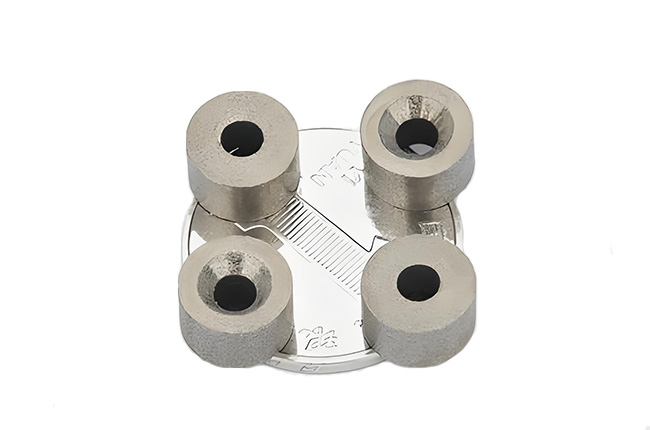
1. What Makes NdFeB Magnets So Powerful?
The exceptional magnetic strength of NdFeB magnets comes from their unique material composition. They are made from a combination of neodymium (Nd), iron (Fe), and boron (B). When these elements form the Nd₂Fe₁₄B crystal structure, the electrons inside align in a way that produces a very strong magnetic field.
This atomic arrangement gives NdFeB magnets extremely high magnetic energy density. As a result, a small piece of NdFeB material can generate a magnetic field far stronger than many conventional magnet types.
2. How the Magnetic Mechanism Works
The working principle of NdFeB magnets is closely tied to electron spin and magnetic domains.
Key mechanisms include:
Electron Spin Alignment
At the atomic level, electrons behave like tiny spinning magnets. In NdFeB materials, many of these spins align in the same direction, creating strong magnetic moments.
Stable Crystal Structure
The Nd₂Fe₁₄B structure naturally stabilizes magnetic moments, allowing the magnet to maintain a high degree of magnetization even under temperature or mechanical stress.
High Coercivity
NdFeB magnets resist demagnetization. Their high coercivity comes from the neodymium element and the microstructure created during sintering or bonding processes.
Magnetic Domains Acting Together
Instead of one giant magnetic block, a NdFeB magnet contains millions of small magnetic domains. When magnetized, these domains align and generate a strong, unified magnetic field.
3. Why NdFeB Magnets Are Used in Modern Technology
Because of their strong magnetic performance, NdFeB magnets are essential in many advanced applications:
Brushless motors and generators
They increase torque output and efficiency.
Consumer electronics
Used in speakers, headphones, mobile devices, and hard-disk drives.
Industrial automation
Applied in sensors, magnetic couplings, and precision control systems.
Medical devices
Incorporated into imaging, diagnostic tools, and specialty instruments.
In all these cases, the compact strength of NdFeB magnets allows engineers to design smaller, lighter, and more efficient equipment.
4. Factors That Influence NdFeB Magnet Performance
Several factors can affect how well a NdFeB magnet performs:
Temperature – High temperatures may reduce magnetic strength depending on the grade.
Coating or surface treatment – Common coatings like nickel, epoxy, or zinc help protect the magnet from corrosion.
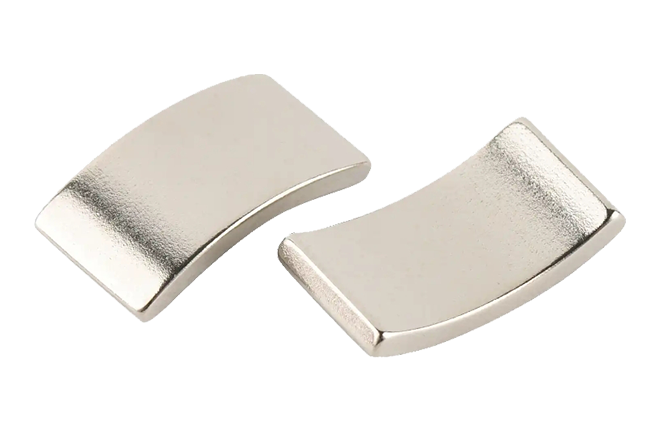
Shape and size – Magnetic field distribution varies with geometry.
Processing method – Sintered NdFeB magnets are stronger than bonded types.
By choosing the right grade and design, manufacturers can maximize the magnet’s stability and performance.
Conclusion
NdFeB magnets work through a combination of electron spin alignment, stable crystal structure, and high coercivity, giving them strong and reliable magnetic capabilities. Their powerful and compact characteristics make NdFeB materials essential in modern technology, from motors to precision electronic devices. Understanding how these magnets operate helps users select the right type for their applications and ensures long-term performance in various engineering environments.
Topping
Contact

We will contact you within 24 hours. ( WhatsApp/facebook:+86 15957855637)