
NdFeB magnets, also known as neodymium iron boron magnets, are famous for being the strongest permanent magnets available today. They are widely used in motors, generators, consumer electronics, medical devices, and many industrial applications. However, one common question often comes up: can temperature really break the strength of NdFeB magnets?
The short answer is yes—temperature can significantly affect their performance. But the full story is more nuanced. Let’s break it down in a clear and practical way.
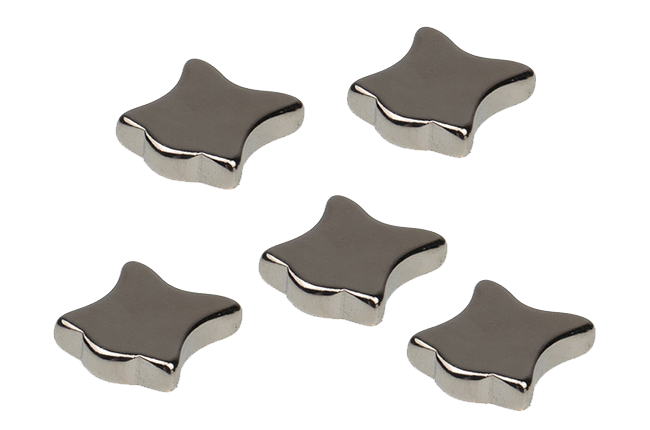
Understanding How NdFeB Magnets Work
NdFeB magnets derive their exceptional strength from their unique crystal structure and magnetic domains. These domains align during magnetization, creating a powerful magnetic field.
However, this alignment is not invincible. External factors such as heat can disturb the internal structure, weakening the magnet over time or even permanently if limits are exceeded.
The Relationship Between Temperature and Magnetic Strength
Temporary vs. Permanent Magnetic Loss
When NdFeB magnets are exposed to elevated temperatures, two types of magnetic loss can occur:
Reversible (temporary) loss: The magnet loses some strength while hot but recovers once it cools down.
Irreversible (permanent) loss: The magnet’s internal structure is damaged, and the lost strength does not return.
Whether the loss is temporary or permanent depends largely on how hot the magnet gets and how long it stays at that temperature.
Maximum Operating Temperature of NdFeB Magnets
Standard NdFeB magnets typically have a maximum operating temperature of around 80°C (176°F). Above this point, irreversible demagnetization can begin.
However, this does not mean all NdFeB magnets fail at the same temperature. Different grades are engineered to handle higher heat. Some high-temperature grades can operate safely at 150°C, 180°C, or even up to 230°C.
That said, pushing magnets close to their limits is always risky, especially in applications where reliability matters.
What Happens When Temperature Gets Too High?
When NdFeB magnets are overheated, several things happen at the microscopic level:
Magnetic domains lose alignment – Heat increases atomic movement, disrupting the magnetic structure.
Coercivity drops – The magnet becomes more vulnerable to external magnetic fields.
Permanent demagnetization may occur – Once the Curie temperature is approached, magnetic properties collapse.
The Curie temperature for NdFeB magnets is typically between 310°C and 400°C, depending on composition. Reaching this point effectively destroys the magnet’s magnetic properties.
Real-World Applications Where Heat Is a Problem
In real life, NdFeB magnets often operate in environments where heat is unavoidable. Common examples include:
Electric motors and servo systems
Automotive components
Wind turbines
Industrial automation equipment
In these applications, heat can come not only from the environment but also from internal electrical losses. Without proper thermal design, even high-grade NdFeB magnets can suffer premature performance loss.
How to Protect NdFeB Magnets from Heat Damage
The good news is that temperature-related issues can be managed with smart design choices:
Choose the Right Magnet Grade
Always select a grade of NdFeB magnets that matches or exceeds the expected operating temperature of your application.
Improve Heat Dissipation
Good ventilation, heat sinks, or thermal insulation can help reduce magnet exposure to excessive heat.
Avoid Sudden Temperature Spikes
Rapid heating and cooling cycles can accelerate magnetic degradation over time.
Consider Alternative Materials
In extremely high-temperature environments, materials like SmCo magnets may be more suitable, even though they are more expensive and slightly weaker.
Does Cold Temperature Affect NdFeB Magnets?
Interestingly, cold temperatures generally do not damage NdFeB magnets. In fact, magnetic performance can slightly improve at lower temperatures.
However, extreme cold may affect coatings or mechanical integrity, so physical protection is still important.

Final Thoughts
So, can temperature break your NdFeB magnets’ strength? Absolutely—if heat limits are ignored. Temperature is one of the most critical factors influencing the long-term performance and reliability of NdFeB magnets.
By understanding how heat affects magnetic properties and choosing the right magnet grade for the job, you can fully enjoy the incredible power of NdFeB magnets without unexpected failures. In short, respect the heat, and your magnets will stay strong for the long run.
Topping
Contact

We will contact you within 24 hours. ( WhatsApp/facebook:+86 15957855637)