
Every Magnet used in motors, sensors, speakers, or industrial equipment goes through a detailed transformation process before reaching its final functional form. Understanding the key stages in Magnet manufacturing provides insight into why performance, strength, and durability vary across different applications.

1. Material Selection
The journey begins with choosing the right raw ingredients. Depending on the desired properties, a Magnet may be made from ferrite, neodymium, samarium cobalt, or bonded compounds. Each material offers different levels of strength, temperature resistance, and stability.
2. Alloy Preparation and Melting
Raw metals are melted together in controlled conditions to form an alloy. This step defines the core magnetic characteristics of the finished Magnet, including stability and energy density.
3. Grinding into Powder
After cooling, the alloy is crushed into fine powder. Particle size matters — smaller grains allow better alignment, which improves Magnet performance.
4. Forming and Magnetic Orientation
The powder is pressed into molds under high pressure. During this stage, an external magnetic field is often applied to align particles in a preferred direction. Alignment ensures the Magnet will achieve its maximum potential strength.
5. Sintering or Bonding
The compacted material undergoes sintering — heating at high temperature to fuse particles — or bonding using polymer binders. This step converts loose particles into a solid Magnet with improved mechanical integrity.
6. Machining and Surface Treatment
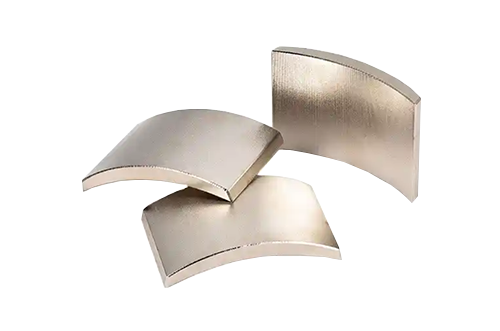
After forming, the Magnet is cut, ground, or shaped to meet dimensional specifications. Surface treatments such as coating or plating are applied to protect against wear or corrosion.
7. Magnetization
Even after shaping, the Magnet is not fully active. It must be magnetized by exposing it to a strong external magnetic field that aligns its internal domains permanently.
8. Testing and Quality Control
Before shipment, each Magnet undergoes inspection to verify size accuracy, coating quality, and magnetic performance. Precision testing ensures reliability in demanding applications.
Conclusion
From alloy selection to powder processing, alignment, finishing, and magnetization, each stage plays an essential role in shaping a Magnet’s final capabilities. By understanding these steps, engineers and buyers gain a clearer picture of why Magnet manufacturing demands expertise — and how it leads to high-performance components powering technology across everyday life.
Topping
Contact

We will contact you within 24 hours. ( WhatsApp/facebook:+86 15957855637)