
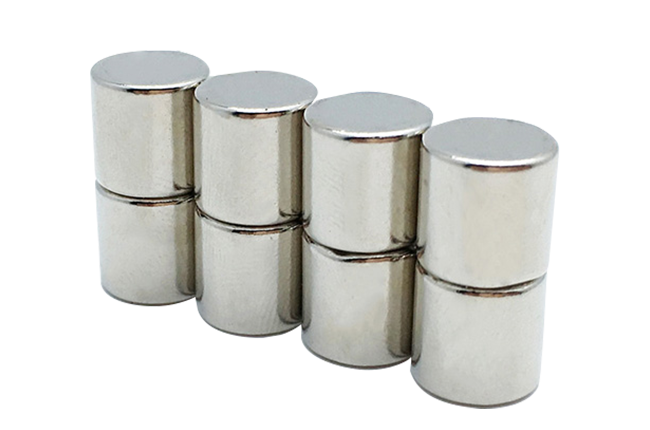
A Neodymium Iron Boron magnet, commonly abbreviated as NdFeB magnet, is a type of rare-earth permanent magnet known for its extremely strong magnetic properties. It is currently the strongest commercially available permanent magnet and is widely used in modern industrial, electronic, and renewable energy applications.
Composition and Structure
Neodymium Iron Boron magnets are primarily composed of:
Neodymium (Nd) – a rare-earth element
Iron (Fe) – the main magnetic component
Boron (B) – improves magnetic structure and stability
The chemical formula is typically written as Nd₂Fe₁₄B, which forms a crystalline structure responsible for its high magnetic strength. This structure allows NdFeB magnets to generate a very strong magnetic field relative to their size.
Key Magnetic Properties
Neodymium Iron Boron magnets are valued for several outstanding characteristics:
High magnetic strength: They have the highest maximum energy product (BHmax) among permanent magnets.
Strong coercivity: Resistant to demagnetization under normal operating conditions.
Compact size: Enables miniaturization of electronic and mechanical devices.
High efficiency: Reduces material usage while maintaining performance.
Because of these properties, NdFeB magnets outperform traditional magnets such as ferrite or Alnico in most applications.
Manufacturing Process
NdFeB magnets are typically manufactured using one of two methods:
Sintered Neodymium Magnets
Produced by powder metallurgy
Offer the highest magnetic performance
Commonly used in industrial and high-precision applications
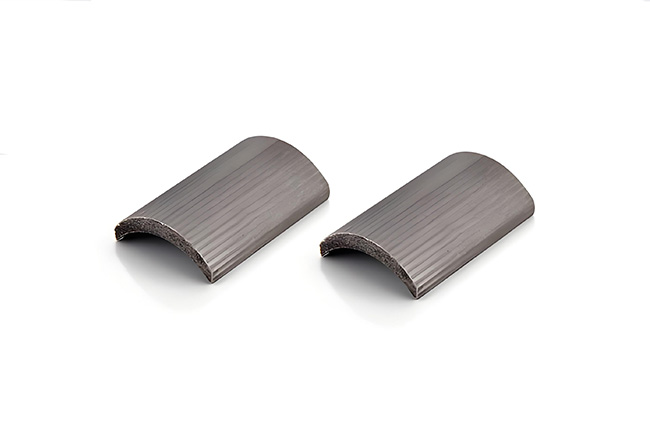
Bonded Neodymium Magnets
Made by mixing magnetic powder with polymer binders
Lower magnetic strength but better shape flexibility
Suitable for complex or thin designs
To prevent corrosion, most NdFeB magnets are coated with protective layers such as nickel, zinc, epoxy, or gold.
Common Applications
Neodymium Iron Boron magnets are widely used across many industries, including:
Electric motors (electric vehicles, industrial motors, drones)
Wind turbines (direct-drive generators)
Consumer electronics (smartphones, headphones, hard drives)
Medical equipment (MRI systems, diagnostic devices)
Industrial automation (sensors, magnetic separators)
Renewable energy systems
Their strong magnetic force allows devices to become smaller, lighter, and more energy-efficient.
Advantages and Limitations
Advantages
Exceptional magnetic strength
Long service life
High performance in compact designs
Energy-efficient solutions
Limitations
Poor corrosion resistance without coating
Lower thermal stability compared to some other magnets
Dependence on rare-earth materials, which can affect cost and supply
To address temperature limitations, special grades containing dysprosium (Dy) or terbium (Tb) are used for high-temperature environments.
Environmental and Safety Considerations
Neodymium magnets are recyclable, but rare-earth mining can have environmental impacts. Proper recycling and responsible sourcing are increasingly important. Additionally, due to their strong magnetic force, NdFeB magnets must be handled carefully to avoid injury or damage to electronic devices.
Conclusion
A Neodymium Iron Boron magnet is a powerful and versatile permanent magnet that plays a crucial role in modern technology. With unmatched magnetic strength and wide industrial applications, NdFeB magnets have become essential in electronics, renewable energy, transportation, and advanced manufacturing. As technology continues to evolve, their importance is expected to grow even further.
Topping
Contact

We will contact you within 24 hours. ( WhatsApp/facebook:+86 15957855637)