
NdFeB magnets are the strongest class of permanent magnets available today, and their incredible power is a direct result of their carefully balanced elemental composition. Understanding what these magnets are made of helps to explain their revolutionary impact on modern technology, from micro-motors to large-scale wind power generation.
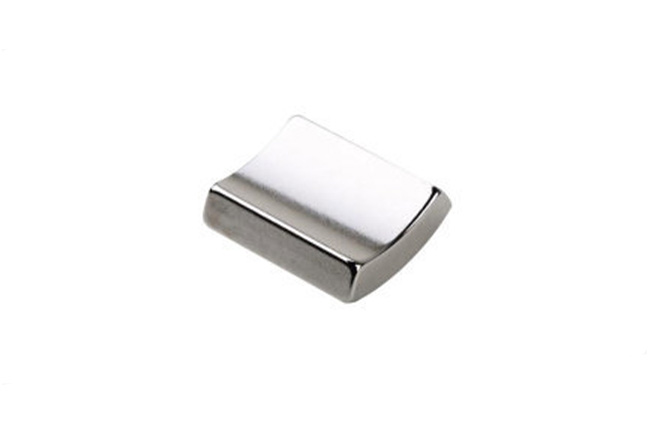
The Three Pillar Elements of NdFeB Magnets
The composition of a standard NdFeB magnet alloy is named for its three main ingredients: Neodymium (Nd), Iron (Fe), and Boron (B). These elements are combined in a precise ratio to create the unique crystal structure that grants the material its unparalleled magnetic properties.
1. Neodymium (Nd): The Source of Power
Neodymium is a Rare Earth element and is the powerhouse of the magnet. It is the core ingredient responsible for the material's exceptionally high magnetic field strength, known scientifically as the maximum energy product (BHmax).
Role: Neodymium’s unique atomic structure, specifically its 4f electron configuration, contributes the highest magnetic moments at the atomic level. This high moment is what allows NdFeB magnets to achieve the highest magnetic energy storage per unit volume compared to any other magnet material.
2. Iron (Fe): The Magnetic Bulk
Iron is the most abundant and cost-effective ferromagnetic element in the composition.
Role: Iron forms the primary magnetic structure of the magnet. It is highly ferromagnetic and contributes the majority of the magnetization properties. Its inclusion ensures that the final magnet has a substantial overall magnetic output without requiring excessive amounts of the more expensive Neodymium.
3. Boron (B): The Structural Stabilizer
Boron is a non-metal that, despite being present in the smallest proportion, is critical for the stability of the alloy.
Role: Boron acts as an atomic binder, or "glue," to form the precise tetragonal crystal structure, known as Nd2Fe14B. This specific structure locks the Neodymium and Iron atoms into an orientation that allows all the internal magnetic domains to align permanently, which is essential for creating a strong permanent magnet.
Beyond the Basics: Additives and Coatings
The majority of commercial NdFeB magnets are not made of just these three elements. Small but crucial additions and protective layers are necessary to enhance performance and ensure longevity.
High-Performance Additives
For applications involving high temperatures (like electric vehicle traction motors or high-speed spindles), the resistance to demagnetization must be improved. This is achieved by adding small quantities of heavier rare earth elements, primarily Dysprosium (Dy) and Terbium (Tb).
Role: These additives significantly boost the magnet's coercivity (the resistance to demagnetization) at elevated temperatures. They are essential for preventing the NdFeB magnets from losing their magnetic strength permanently when exposed to heat.
Essential Protective Coatings
A key weakness of the base NdFeB alloy is its susceptibility to corrosion. The high iron content means the material will rust and degrade rapidly when exposed to air and moisture.
Role: Almost all finished NdFeB magnets are covered with a protective coating or plating. The most common is a triple layer of Nickel-Copper-Nickel (Ni-Cu-Ni), but other options include Zinc, Epoxy, or various polymers. This layer does not contribute to the magnetic field but is absolutely necessary to seal the magnet and guarantee its long-term reliability and performance in real-world operating environments.
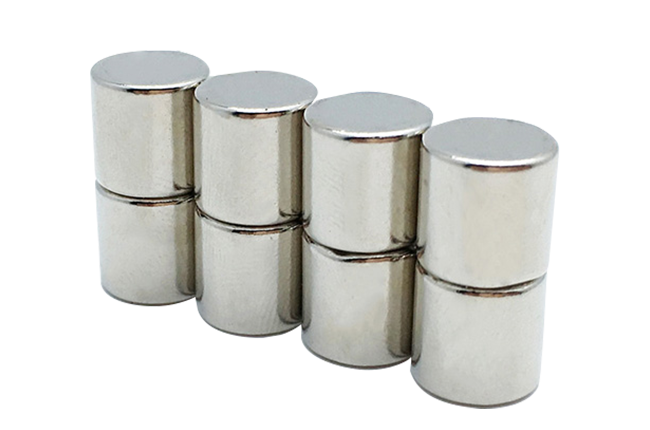
The sophisticated composition of NdFeB magnets—from the powerful Neodymium core to the stabilizing Boron and the protective coatings—is what makes them the unrivaled champions of the permanent magnet world, driving innovation across nearly every sector of modern industry.
Topping
Contact

We will contact you within 24 hours. ( WhatsApp/facebook:+86 15957855637)