
Magnetic technology influences countless modern systems, from motors and sensors to consumer electronics and industrial automation. Two widely used magnetic forms — Permanent Magnets and Electromagnets — serve similar purposes but operate through very different principles. Understanding their distinctions helps designers, students, and hobbyists choose the right option for their applications.
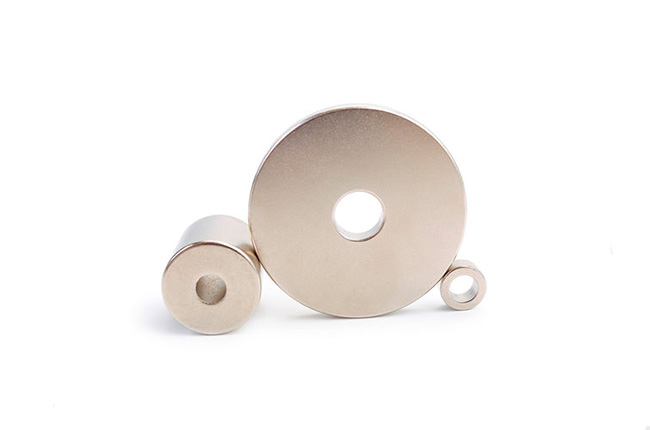
How Permanent Magnets Work
Permanent Magnets generate magnetic fields without external energy. Their magnetism comes from the internal alignment of atomic particles, which remains stable unless exposed to heat, corrosion, or opposing magnetic forces. They are commonly used in:
Speakers
Sensors
Holding fixtures
Small motors
The advantage of Permanent Magnets is their simplicity — once manufactured, they maintain magnetism over long periods without needing power.
How Electromagnets Work
Electromagnets behave differently. Their magnetic force is generated when electric current flows through a wire coil, often wound around a metal core. When the current stops, the magnetism quickly disappears. Electromagnets are found in devices that require controllable or switchable magnetism, including:
Industrial lifting systems
Electric relays
Magnetic locks
Transformers
The key benefit is adjustability — Electromagnets can change strength or deactivate instantly.
Comparing Strength and Efficiency
Permanent Magnets offer high energy density in small volumes and need no electricity, making them efficient for compact or battery-powered devices. Electromagnets, meanwhile, provide controllable force, making them ideal where variable magnetic output is required.
Material and Design Differences
Permanent Magnets are made from materials such as ferrite, neodymium, or samarium cobalt. Their performance depends on composition and protective coatings. Electromagnets rely more on electrical engineering — coil design, core material, and power supply shape their strength and responsiveness.
Choosing Between Permanent Magnets and Electromagnets
The best option depends on application goals:
Need continuous magnetism without energy? Permanent Magnets are suitable.
Need on-demand or adjustable magnet force? Electromagnets deliver flexibility.
Understanding these trade-offs helps engineers balance durability, energy use, and control.
Conclusion
Permanent Magnets and Electromagnets may both produce magnetic force, but their operating principles, strengths, and ideal uses are very different. Permanent Magnets shine in passive, long-term applications, while Electromagnets excel when dynamic or adjustable control is needed. Recognizing these differences ensures better design choices in the many technologies shaped by magnetism today.
Topping
Contact

We will contact you within 24 hours. ( WhatsApp/facebook:+86 15957855637)