
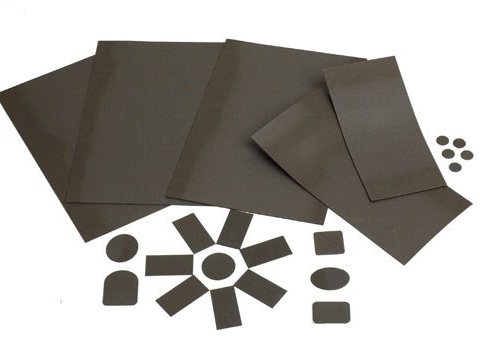
A rubber magnet is a flexible magnetic material that combines magnetic powder with rubber or plastic binders. Unlike traditional rigid magnets, a rubber magnet can bend, cut, and shape easily while still providing stable magnetic performance. Because of this unique combination of flexibility and magnetism, rubber magnets are widely used in both industrial and everyday applications.
How Does a Rubber Magnet Work?
A rubber magnet is typically made by mixing ferrite magnetic powder with synthetic rubber or PVC. This mixture is then processed through extrusion or calendering to form sheets, strips, or custom profiles. Once magnetized, the material is able to attract ferromagnetic objects just like conventional magnets.
Although rubber magnets are not as strong as rare-earth magnets, they offer sufficient magnetic force for applications where flexibility, safety, and ease of installation are more important than maximum strength.
Key Characteristics of Rubber Magnets
Flexibility and Durability
One of the main advantages of a rubber magnet is its flexibility. It can be bent around curved surfaces without cracking or losing its shape. This makes it ideal for products that require repeated handling or installation on uneven surfaces.
Lightweight and Safe
Rubber magnets are lightweight and have soft edges, reducing the risk of damage or injury. This makes them especially suitable for consumer products, educational tools, and household use.
Corrosion Resistance
Because a rubber magnet does not contain exposed metal, it is naturally resistant to rust and corrosion. This allows it to perform well in humid or mildly harsh environments.
Common Applications of Rubber Magnets
Thanks to their versatility, rubber magnets are used across a wide range of industries:
Refrigerator magnets and promotional items
Magnetic labels and signage
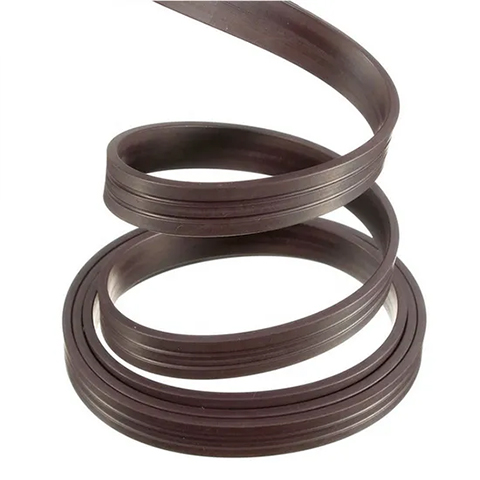
Sealing strips for doors and appliances
Automotive components
Whiteboards and display systems
In marketing and retail, rubber magnets are especially popular because they are easy to print on, cut into custom shapes, and mass-produced at low cost.
Rubber Magnet vs. Traditional Permanent Magnets
Compared to rigid permanent magnets such as neodymium or ferrite blocks, a rubber magnet offers different advantages:
Strength: Lower magnetic force
Flexibility: Significantly higher
Cost: Generally more economical for large surfaces
Processing: Easy to cut, punch, and laminate
Because of these differences, rubber magnets are often chosen for functional and decorative purposes rather than high-power magnetic applications.
Why Choose a Rubber Magnet?
A rubber magnet is the right choice when your application requires adaptability, safety, and cost efficiency. Whether used in commercial displays or industrial sealing systems, rubber magnets provide a practical solution where rigid magnets are not suitable.
Conclusion
A rubber magnet is a flexible, durable, and versatile magnetic material designed for applications that require ease of use rather than extreme magnetic strength. By combining magnetic performance with rubber-like flexibility, the rubber magnet has become an essential component in modern consumer products and industrial designs.
Understanding what a rubber magnet is and how it works can help businesses and designers select the right magnetic solution—balancing performance, functionality, and cost.
Topping
Contact

We will contact you within 24 hours. ( WhatsApp/facebook:+86 15957855637)