
When it comes to permanent magnets, there is a vast array of materials, each offering unique properties and applications. Among the most powerful and widely used are NdFeB magnets, which stand for Neodymium-Iron-Boron. These magnets are known for their exceptional strength and compact size. In this article, we will explore the key differences between NdFeB magnets and other types of permanent magnets, focusing on their composition, performance, and practical applications.
What is NdFeB (Neodymium-Iron-Boron)?
NdFeB magnets are made from an alloy of neodymium (Nd), iron (Fe), and boron (B), which is why they are often referred to as "neodymium magnets." These magnets are part of the rare-earth magnet family, which also includes other types like samarium-cobalt (SmCo) magnets. NdFeB magnets are known for their high magnetic strength, making them the strongest commercially available permanent magnets.
Composition and Manufacturing Process
The key difference between NdFeB magnets and other permanent magnets lies in their composition. NdFeB magnets are composed of a combination of rare-earth elements (neodymium and boron) and iron. The high concentration of rare-earth elements in NdFeB magnets is responsible for their superior magnetic properties.
Other common types of permanent magnets include:
Alnico Magnets: Composed primarily of aluminum (Al), nickel (Ni), and cobalt (Co), these magnets are known for their ability to operate at higher temperatures but have lower magnetic strength compared to NdFeB magnets.
Samarium-Cobalt Magnets: These magnets are made from an alloy of samarium (Sm) and cobalt (Co). While they are also part of the rare-earth magnet family, SmCo magnets tend to be more stable at high temperatures and offer good corrosion resistance.
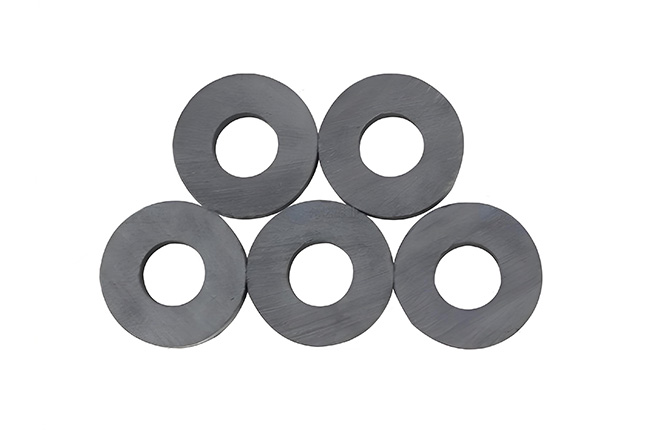
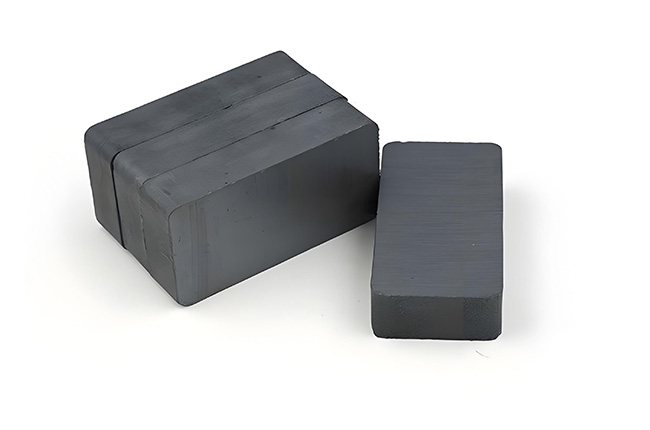
Ferrite Magnets: These magnets are composed of iron oxide (Fe2O3) mixed with barium or strontium carbonate. Ferrite magnets are commonly used in low-cost applications, but they are much weaker than NdFeB and SmCo magnets.
Ceramic Magnets: Like ferrites, ceramic magnets are made of a mixture of iron oxide and other metal oxides. They are inexpensive and corrosion-resistant but have significantly lower magnetic strength than NdFeB magnets.
Magnetic Strength and Performance
The most noticeable difference between NdFeB magnets and other types is their magnetic strength. NdFeB magnets are the most powerful permanent magnets available, with a magnetic energy product (measured in mega gauss oersteds, MGOe) typically ranging between 30 to 55 MGOe. This means that they can generate a much stronger magnetic field in a smaller volume compared to other types of magnets.
For example, Alnico magnets usually have a magnetic energy product between 5 to 12 MGOe, while ferrite magnets fall between 2 to 5 MGOe. Samarium-cobalt magnets, although strong, typically have a lower energy product than NdFeB magnets but offer better resistance to heat and corrosion.
Temperature Sensitivity
Temperature plays a crucial role in the performance of permanent magnets. NdFeB magnets are known for their high performance at room temperature but can experience a significant decrease in magnetic strength when exposed to temperatures above 80°C (176°F). This is due to the inherent characteristics of neodymium.
On the other hand, Samarium-Cobalt magnets offer superior high-temperature performance, with many SmCo magnets capable of maintaining their strength at temperatures up to 350°C (662°F). Alnico magnets also perform well in high-temperature environments, with operating temperatures often exceeding 500°C (932°F).
Ferrite magnets, although not as strong, can tolerate higher temperatures than NdFeB magnets without a significant loss in performance.
Corrosion Resistance
One of the challenges with NdFeB magnets is their susceptibility to corrosion. The presence of iron in their composition makes them prone to rusting if not properly coated. To mitigate this, NdFeB magnets are often coated with a protective layer of nickel, zinc, or epoxy.
Samarium-Cobalt magnets, in contrast, offer excellent corrosion resistance due to the inherent properties of samarium and cobalt. This makes them suitable for applications in harsh environments where corrosion could be a concern.
Ferrite magnets are naturally resistant to corrosion due to their ceramic composition, which makes them ideal for use in outdoor or industrial environments where moisture is present.
Applications
Due to their high magnetic strength, NdFeB magnets are used in a wide variety of high-performance applications, including:
Electric motors: NdFeB magnets are commonly found in electric motors, especially in small, high-efficiency motors like those used in electric vehicles, robotics, and consumer electronics.
Magnetic resonance imaging (MRI): The strong magnetic field generated by NdFeB magnets makes them ideal for use in MRI machines, where high magnetic flux density is required.
Speakers and headphones: The compact size and powerful magnetic field of NdFeB magnets make them ideal for audio devices, providing clear and accurate sound reproduction.
Wind turbines: NdFeB magnets are increasingly being used in wind turbine generators due to their high efficiency and reliability.
While NdFeB magnets dominate in applications requiring strong magnetic fields in a small package, other magnets like ferrite magnets are still widely used in low-cost, low-power applications. Samarium-Cobalt magnets, with their superior high-temperature and corrosion resistance, are often found in aerospace, military, and other demanding sectors.
Conclusion
NdFeB magnets stand out as the most powerful permanent magnets available, offering superior magnetic strength, compactness, and versatility. Their composition of neodymium, iron, and boron gives them a distinct advantage in a wide range of applications, from consumer electronics to renewable energy. However, other types of permanent magnets, such as Alnico, Samarium-Cobalt, and Ferrite, still have their place in specific industries, particularly where temperature stability, corrosion resistance, or cost is a primary concern.
Understanding the differences between these magnets can help you choose the right material for your needs, ensuring the most efficient and effective performance for your application.
Topping
Contact

We will contact you within 24 hours. ( WhatsApp/facebook:+86 15957855637)