
Magnets are fascinating objects with properties that seem simple at first glance but are deeply rooted in fundamental physics. One of the most common and intriguing questions in magnetism is whether it is possible to have only a north pole of a magnet without a corresponding south pole. The short and scientifically accepted answer is no—at least not in everyday physics as we know it.
Let’s explore why this is the case.
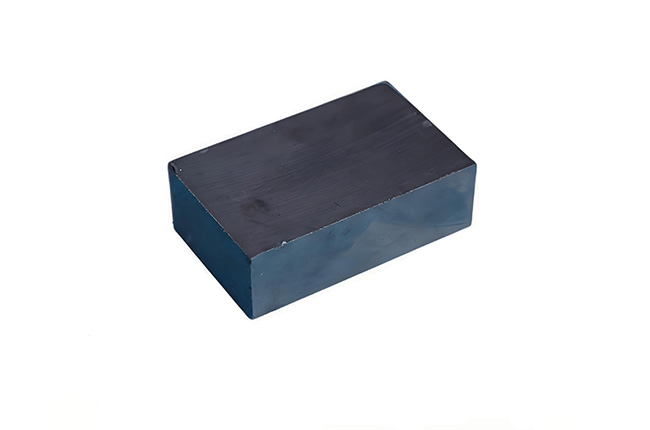
Understanding Magnetic Poles
Every magnet has two poles: a north pole and a south pole. These poles are not separate entities but part of a single magnetic system created by the alignment of magnetic domains inside the material.
Magnetic field lines always form closed loops. Outside the magnet, they travel from the north pole to the south pole, and inside the magnet, they return from south to north. Because of this continuous loop, a single isolated magnetic pole cannot naturally exist.
In simple terms, magnetism likes to work in pairs—it doesn’t do solo acts.
What Happens If You Cut a Magnet in Half?
A common experiment is to cut a magnet in half to try to separate the poles. However, when this is done, each piece becomes a smaller magnet with its own north and south poles.
No matter how many times the magnet is divided, each fragment will always contain both poles. This behavior clearly demonstrates that magnetic poles are inseparable in conventional magnetic materials.
Why Isolated Magnetic Poles Do Not Exist (So Far)
In physics, isolated magnetic poles are called magnetic monopoles. While electric charges can exist independently as positive or negative charges, magnetism does not behave the same way.
According to Maxwell’s equations, which govern classical electromagnetism, magnetic monopoles do not appear in nature. This is why magnets always exist as dipoles, with both a north and a south pole.
What About Magnetic Monopoles in Theory?
Interestingly, some advanced theoretical models in physics do predict the possible existence of magnetic monopoles. Certain quantum theories and cosmological models suggest they may have formed in the early universe.
Scientists have been searching for experimental evidence of magnetic monopoles for decades. While there have been observations of monopole-like behavior in special laboratory materials, no true, isolated magnetic monopole has been conclusively observed in nature.
So for now, monopoles remain more of a scientific curiosity than a practical reality.
Practical Implications
Because isolated magnetic poles do not exist, all magnetic devices—from motors and generators to data storage and sensors—are designed around dipole magnetic fields. Engineers and scientists work with this fundamental rule rather than trying to break it.
In everyday life, this means you’ll never find a magnet that has only one pole. No matter how hard you try, the other pole is always there, quietly doing its job.

Conclusion
You cannot have just a north pole of a magnet on its own. Every magnet must have both a north and a south pole, and cutting or breaking a magnet will never change that fact. While theoretical physics allows for the possibility of magnetic monopoles, they have not been observed in the natural world.
In short, magnetism comes as a package deal—north and south, always together.
Topping
Contact

We will contact you within 24 hours. ( WhatsApp/facebook:+86 15957855637)