
When you search online for “NdFeB magnets for sale,” the results can feel overwhelming. Prices vary wildly, specifications look similar on the surface, and every supplier claims their magnets are “high quality.” This naturally leads to one key question: are all NdFeB magnets really the same?
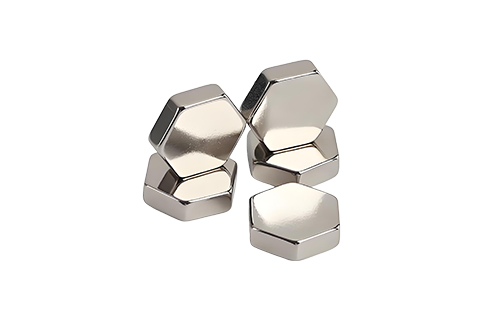
The short answer is no. Not even close. While many NdFeB magnets may look identical, their performance, reliability, and lifespan can differ significantly. In this article, we will break down the technical factors that matter, explain why quality varies, and keep the language grounded enough so it does not feel like a textbook.
What Are NdFeB Magnets, Really?
NdFeB magnets, also known as neodymium magnets, are made from an alloy of neodymium, iron, and boron. They are the strongest commercially available permanent magnets and are widely used in motors, generators, medical devices, electronics, sensors, and renewable energy systems.
Because of their strength-to-size ratio, NdFeB magnets are often chosen for high-performance and space-constrained applications. However, strength alone does not define quality. That is where many buyers get tripped up.
Magnet Grade: Same Letters, Different Results
One of the first things you will notice when browsing NdFeB magnets for sale is the grade marking, such as N35, N42, N52, or versions with suffixes like M, H, SH, UH, EH, or AH.
These grades indicate:
Maximum energy product, which directly relates to magnetic strength
Temperature resistance, which affects performance stability
Two magnets labeled with the same grade may still perform differently in real-world conditions. Why? Because grade only defines minimum standards. Manufacturers can exceed those standards, barely meet them, or sometimes fall short due to poor process control.
In simple terms, not all “N52” magnets are created equal, even if the label says so.
Raw Materials Make a Bigger Difference Than You Think
High-quality NdFeB magnets depend heavily on the purity and consistency of raw materials. Variations in rare earth content, oxygen levels, or trace contaminants can affect:
Magnetic output
Mechanical strength
Resistance to corrosion
Lower-cost magnets often use recycled or lower-purity materials. While this can reduce price, it may also lead to unstable magnetic performance or early failure. You might save money upfront, but pay for it later with downtime or replacements.
Think of it like buying fuel for a race car. Cheap fuel may still run the engine, but it is not what you want if performance actually matters.
Manufacturing Process: Where Quality Is Won or Lost
The production of NdFeB magnets is complex and highly sensitive to process control. Key steps include powder preparation, alignment, pressing, sintering, machining, and coating.
Small differences in:
Sintering temperature
Grain alignment accuracy
Density control
can significantly affect the final magnet. Advanced manufacturers invest in precision equipment, strict quality checks, and experienced engineers. Others cut corners to push prices down.
On paper, two magnets may look the same. In operation, one performs smoothly for years, while the other demagnetizes, cracks, or corrodes prematurely.
Coating and Corrosion Resistance Are Often Overlooked
NdFeB magnets are naturally prone to corrosion, especially in humid or harsh environments. That is why coatings matter.
Common coatings include:
Nickel-copper-nickel
Epoxy
Zinc
Phosphate
The coating quality, thickness, and adhesion all affect durability. Poor coating may peel or develop microcracks, allowing moisture to reach the magnet core. Once corrosion starts, performance drops fast.
If a supplier does not clearly specify coating type and quality standards, that is a red flag. This is one of those details that does not look exciting, but it really matters in practice.
Tolerance and Consistency: Critical for Industrial Use
For hobby or one-off applications, small dimensional variations may not matter. But in industrial settings, consistency is everything.
High-quality NdFeB magnets offer:
Tight dimensional tolerances
Stable magnetic properties across batches
Reliable traceability
Low-end magnets may vary from piece to piece. That inconsistency can cause assembly issues, vibration, noise, or reduced efficiency in motors and systems.
In other words, if you need magnets to behave predictably, you cannot rely on “cheap and good enough.”
Certifications and Testing: Not Just Marketing Words
Professional suppliers invest in testing and certification. This may include:
Magnetic property testing
Salt spray or corrosion testing
Thermal stability testing
ISO quality management systems
While certifications alone do not guarantee quality, the absence of any testing information should make buyers cautious. A trustworthy supplier will not hesitate to explain how their magnets are tested and controlled.
Price: The Truth Behind the Numbers
If you see NdFeB magnets for sale at prices far below market average, there is usually a reason. That reason might be lower-grade materials, looser tolerances, weaker coatings, or minimal quality control.
This does not mean expensive always equals better, but extremely low prices often come with hidden costs. As the saying goes, “you get what you pay for,” and in the magnet world, that saying holds up pretty well.
So, Are All NdFeB Magnets the Same?
Absolutely not. While they may share the same chemical name, NdFeB magnets can differ greatly in strength stability, durability, corrosion resistance, and consistency.
When choosing NdFeB magnets for sale, smart buyers look beyond the headline grade and price. They consider materials, manufacturing process, coating quality, and supplier credibility. Doing a bit of homework upfront can save a lot of trouble later.
At the end of the day, the best magnet is not just the strongest one on paper. It is the one that performs reliably in your actual application, day after day, without surprises.
Topping
Contact

We will contact you within 24 hours. ( WhatsApp/facebook:+86 15957855637)