
It's a question many people wonder about, particularly when an old refrigerator magnet doesn't stick as well as it used to: Do magnets eventually weaken? The answer is a definitive yes—permanent magnets can and do lose their strength over time, although usually, it takes specific conditions to cause a significant, rapid decrease in their magnetic power.
A permanent magnet is only "permanent" until its carefully aligned internal structure is disturbed.
The Number One Enemy: Heat
The most common and effective way to demagnetize a magnet is through exposure to high temperatures.
Curie Temperature: Every ferromagnetic material has a specific temperature, called the Curie temperature (or Curie point, $T_C$), at which it completely loses its permanent magnetism. When heated past this point, the thermal energy overwhelms the forces that hold the atomic magnetic moments in alignment. The tiny internal magnetic domains become randomized, and the external magnetic field collapses.
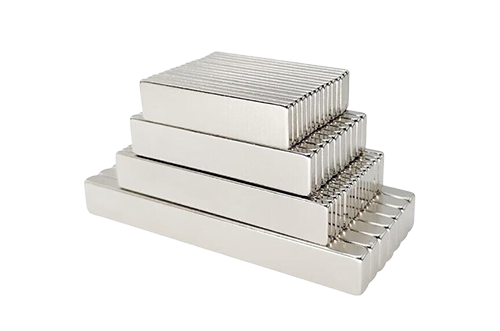
Gradual Weakening: Even temperatures well below the Curie point can cause magnets to lose strength over time. This is why high-performance rare-earth magnets, like Neodymium, often need protective coatings and cooling in high-heat applications like electric motors. The sustained heat causes a gradual, irreversible loss of magnetic output.
Physical Shock and Force
A sharp, violent impact can also cause a permanent magnet to lose some of its strength.
Disrupting Domains: A significant physical shock, such as repeatedly dropping or hammering a magnet, generates mechanical stress that can physically jostle the aligned internal magnetic domains. If the shock is strong enough, it can knock some of these domains out of alignment, resulting in a slightly weaker external magnetic field. This is particularly true for older, more brittle magnet materials like Alnico.
Exposure to External Fields
Placing a magnet in the presence of a strong opposing magnetic field is another sure way to weaken or destroy its permanent magnetism.
Demagnetization: If a strong external magnetic field is applied in the opposite direction of the magnet's own poles, it can force the internal magnetic domains to reverse their alignment. If this external field is stronger than the magnet's inherent resistance to demagnetization (a property called coercivity), the magnet will be partially or completely demagnetized. This is the principle used in industrial demagnetization processes.
Time and Corrosion (Minor Effects)
While not as dramatic as heat or an opposing field, other factors contribute to the long-term, slow decay of magnets:
Corrosion: Many high-strength rare-earth magnets, particularly Neodymium, contain iron and are prone to rust when exposed to moisture. This corrosion can physically degrade the magnetic material, reducing the amount of ferromagnetic substance and thus weakening the overall magnet. This is why these magnets are almost always plated with Nickel, Copper, or other protective layers.
Age: Over extremely long periods, even under ideal conditions, the internal thermal motion of atoms can cause a tiny, gradual randomization of the magnetic domains, leading to an incredibly slow loss of strength. However, for modern, high-quality magnets, this process is negligible in a human lifespan.
In conclusion, a permanent magnet maintains its strength by keeping its atomic domains perfectly aligned. Any outside force—be it thermal, physical, or magnetic—that disrupts this alignment will cause the magnet to lose its power.
Topping
Contact

We will contact you within 24 hours. ( WhatsApp/facebook:+86 15957855637)