
Gold has fascinated humanity for thousands of years due to its beauty, rarity, and unique physical properties. One question often asked by both investors and science enthusiasts is: why can’t gold be magnetic? To understand this, we need to look at the fundamental principles of magnetism and the atomic structure of gold.
Understanding Magnetism at the Atomic Level
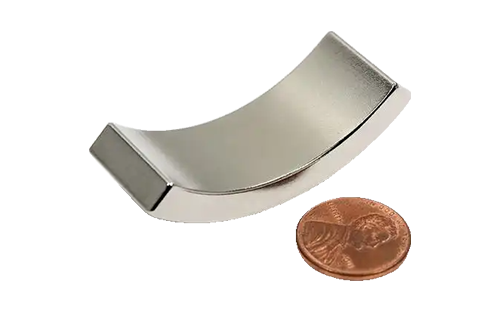
Magnetism is a physical phenomenon caused by the motion of electric charges, primarily arising from the spin and orbital movement of electrons within atoms. In materials that are magnetic, such as iron, cobalt, and nickel, many atoms have unpaired electrons. These unpaired electrons generate magnetic moments that can align in the same direction, producing a noticeable magnetic field.
When these magnetic moments align over large regions called magnetic domains, the material becomes ferromagnetic and can be attracted to a magnet.
The Atomic Structure of Gold
Gold is a chemical element with the symbol Au and atomic number 79. Its electrons are arranged in such a way that all electron spins are paired. Because paired electrons cancel out each other’s magnetic moments, gold does not produce a net magnetic field.
As a result, gold does not exhibit ferromagnetism or even strong paramagnetism.
Gold Is Diamagnetic
Scientifically, gold is classified as a diamagnetic material. Diamagnetism is a very weak form of magnetism that occurs in substances with no unpaired electrons. When exposed to an external magnetic field, diamagnetic materials generate a tiny opposing magnetic field, causing them to be slightly repelled rather than attracted.
However, this effect is extremely weak and not observable in everyday conditions. This means that, for all practical purposes, gold appears non-magnetic.
Can Gold Ever Be Magnetic?
Under normal conditions, pure gold cannot become magnetic. Even when exposed to very strong magnetic fields, gold will not retain magnetism.
That said, there are two situations that can cause confusion:
Gold Alloys
Jewelry and industrial gold often contain other metals such as iron, nickel, or cobalt. If these magnetic metals are present, the object may show magnetic behavior, but this magnetism comes from the added metals, not the gold itself.
Nanostructured Gold
In advanced laboratory research, gold nanoparticles combined with other elements may exhibit unusual magnetic properties. These effects occur at the nanoscale and do not apply to bulk gold used in coins, bars, or jewelry.
Why Gold’s Non-Magnetic Nature Matters
Gold’s resistance to magnetism is actually a valuable property. It makes gold highly reliable in applications where magnetic interference must be avoided, such as:
Electronics and precision instruments
Medical devices
Aerospace technology
Authenticity testing for gold bullion
In fact, magnet testing is a common method to detect counterfeit gold, since fake gold items often contain magnetic metals.

Conclusion
Gold cannot be magnetic because its atomic structure contains no unpaired electrons, preventing the formation of magnetic domains. As a diamagnetic material, gold is weakly repelled by magnetic fields and shows no attraction under normal conditions. This fundamental property helps explain why gold is so stable, reliable, and valuable across science, technology, and finance.
Understanding why gold is non-magnetic not only deepens our knowledge of physics but also reinforces gold’s unique role as one of the most trusted materials in human history.
Topping
Contact

We will contact you within 24 hours. ( WhatsApp/facebook:+86 15957855637)